Best Cable Management Solutions 2026
Cable chaos is the difference between a desk that photographs like a setup tour and one that collects dust in ways you can't clean. The fix is a system, not a single product: get the power strip off the floor, give cable runs a hidden path, and bundle what remains. These five picks are that system — most desks want three of them, and the whole kit costs less than one mechanical keyboard.
Our Ranked Picks
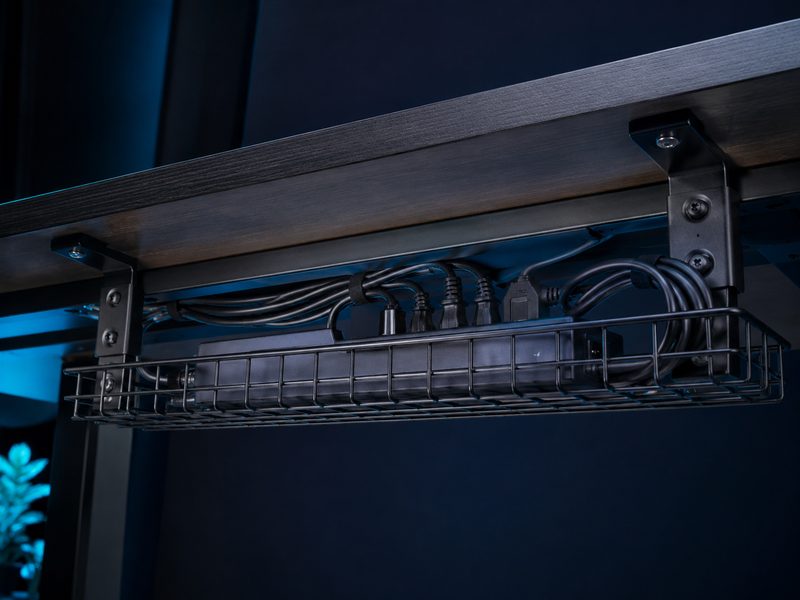
Under-Desk Cable Tray (Yecaye)
The under-desk tray is the highest-impact single purchase in cable management: a steel mesh basket that screws or clamps beneath the desk, swallowing the power strip, the wall warts, and every cable's excess length. The floor clears instantly, vacuuming stops being an obstacle course, and standing-desk users get cables that travel with the desk.
- Steel mesh tray mounts under any desk
- Holds a full power strip plus adapters
- Screw or clamp mounting options
- Essential for sit-stand desks
Why it made the list: One tray takes the entire floor mess and makes it vanish.
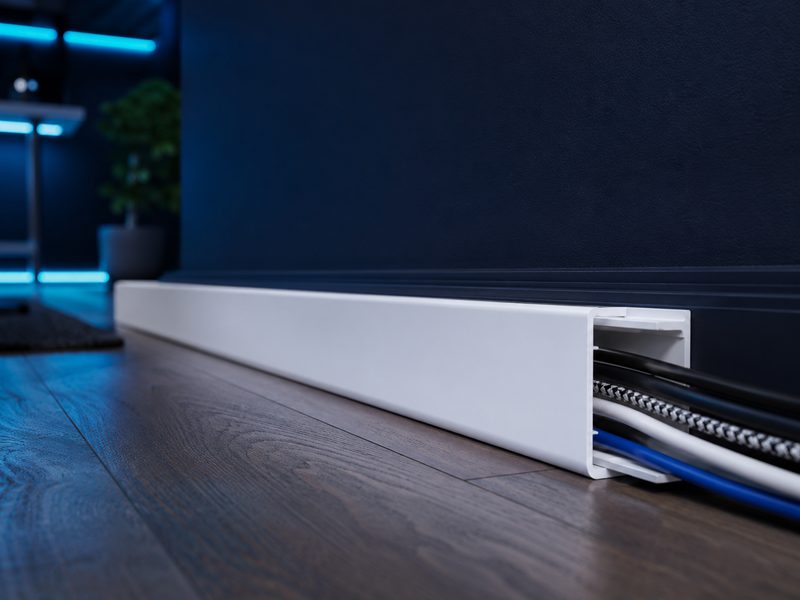
D-Line Cable Raceway Kit
D-Line's raceways are paintable channels that stick to walls and baseboards, hiding TV drops, desk-to-outlet runs, and anything else that currently dangles. Kits include straight runs plus corner and junction pieces, the adhesive holds without wrecking paint, and once painted to match the wall they effectively disappear. Renter-safe tidiness.
- Adhesive channels for walls and baseboards
- Corner and junction pieces included
- Paintable to match any wall
- Removes cleanly — renter friendly
Why it made the list: Makes wall-crossing cables disappear without drilling a thing.

VELCRO One-Wrap Ties
A roll of One-Wrap is the duct tape of cable management: tear off a strip, bundle a cable, reuse it forever. Unlike zip ties, hook-and-loop opens instantly when you rearrange, never bites into insulation, and one roll manages every drawer, bag, and desk in a home. The cheapest item on this page does the most recurring work.
- Cut-to-length hook-and-loop roll
- Reusable indefinitely, tool-free
- Won't pinch or damage cable insulation
- One roll handles a whole home
Why it made the list: The infinitely reusable bundle-everything roll every desk drawer needs.

JOTO Cable Sleeve
The JOTO sleeve zips a fistful of cables into one clean fabric tube — the classic fix for the monitor-arm waterfall, the TV-to-console bundle, and the desk-leg run. Flexible neoprene bends around corners, cables exit anywhere along the zip, and a multi-pack handles a whole battlestation. It turns eight cables into one deliberate-looking line.
- Zippered neoprene tube, flexible routing
- Cables can exit at any point
- Multi-pack covers a full desk setup
- Trims to length with scissors
Why it made the list: Turns any ugly cable bundle into one tidy intentional line.

Bluelounge CableBox
The CableBox is the finishing move: a fire-retardant enclosure that hides the power strip itself, with slots that let cables exit while the visual clutter stays boxed. On a floor, a shelf, or a media console, it replaces the worst-looking object in any room with a clean minimalist block. Function is simple; the visual upgrade is anything but.
- Hides a full power strip and plugs
- Fire-retardant enclosure
- Side slots for cable exits
- Sits on floor, shelf, or console
Why it made the list: Hides the ugliest object in the room inside a clean white box.
Buying Guide
Work top-down
Order of operations: mount the power strip under the desk (tray), route wall-crossing runs (raceway), bundle what travels together (sleeve), and tie off the slack (velcro). Doing it in that order means never redoing a step.
Leave service loops
Bundle cables with a little slack at each end rather than pulled taut. You'll thank yourself the next time you swap a monitor or pull a drive — over-tight cable runs turn two-minute changes into full teardowns.
Label before you bundle
A strip of masking tape with a sharpie note on each cable end costs nothing and saves the classic which-plug-is-this archaeology later. Do it while everything's unplugged for the reorganization.
Frequently Asked Questions
Where do I start if my desk is a disaster?
The under-desk tray. Getting the power strip and adapter bricks off the floor removes most of the visible mess in one step, and everything else — sleeves, ties, raceways — builds on cables that now have a destination.
Velcro ties or zip ties?
Velcro for anything you might ever touch again — it's reusable and gentle on insulation. Zip ties only for permanent structural bundling you'd cut open anyway. Most desk setups should be all velcro.
How do I manage cables on a standing desk?
Everything mounts to the desk's underside so the whole loom travels with it: tray for the strip, sleeve for the run to the wall, and generous slack on that one wall run. One drooping sleeve to the outlet is the only cable that should move.
Do adhesive raceways damage walls?
Quality raceways with proper adhesive remove cleanly from painted drywall when peeled slowly and warm. On delicate finishes, test a short strip somewhere hidden first — and renters should keep the removal instructions.