Best External Storage 2026
Portable SSDs have become small enough to pocket and fast enough to edit video from directly — the category is genuinely excellent. The complication in 2026 is pricing: the global NAND shortage has pushed drive prices up dramatically and emptied stock of popular models, which is exactly why comparing both retailers below matters more than usual. These five picks are ranked on performance, durability, and availability.
Our Ranked Picks
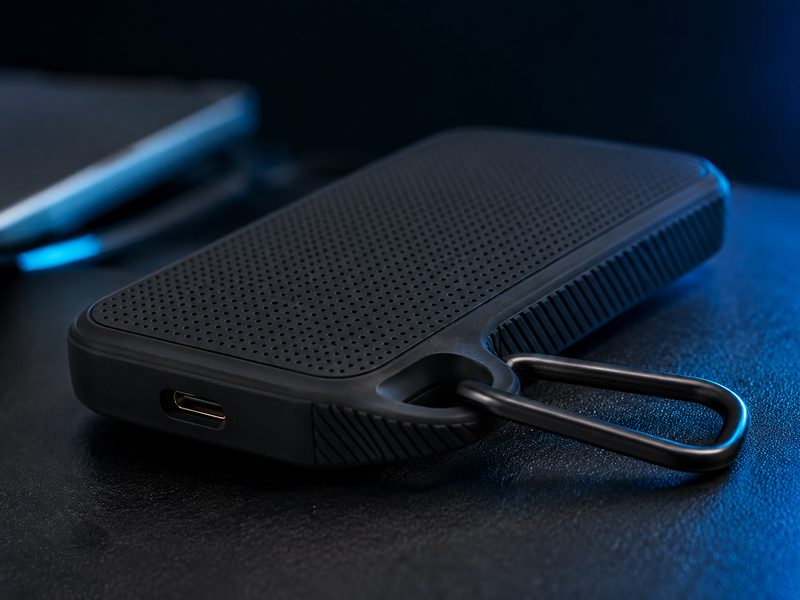
Samsung T9
The T9 is the dependable default: fast sustained transfers over USB 3.2 Gen 2x2, a rubberized shell rated for two-meter drops, hardware encryption, and Samsung's reliability record. The carabiner loop sounds like a gimmick until you clip it inside a camera bag. It's the drive to buy when you just want the safe, fast answer.
- Up to 2,000 MB/s over USB 3.2 Gen 2x2
- Rubberized shell, 2m drop rated
- Hardware AES encryption
- 1TB to 4TB capacities
Why it made the list: The safe default — fast, tough, encrypted, and proven.
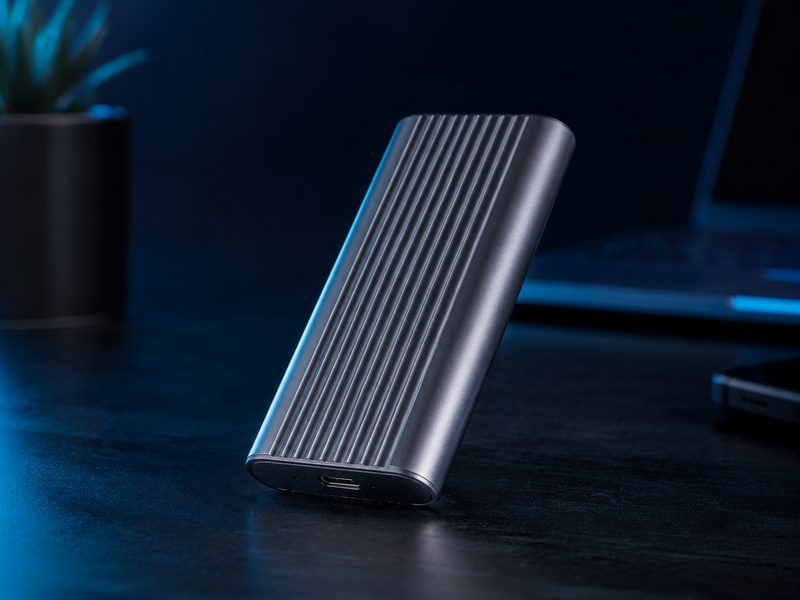
Corsair EX400U
The EX400U is the fastest portable drive most people can actually use: USB4 connectivity pushing roughly double the speed of Gen 2x2 drives, with an aluminum heatsink body that sustains those speeds through long transfers. On a USB4 or Thunderbolt port it's transformative for video work; on older ports it gracefully falls back to standard speeds.
- USB4 interface, roughly 4,000 MB/s class speeds
- Aluminum heatsink body for sustained transfers
- Backward compatible with USB 3.2 ports
- Compact, pocketable form factor
Why it made the list: Double the speed of mainstream drives for creators with USB4 ports.
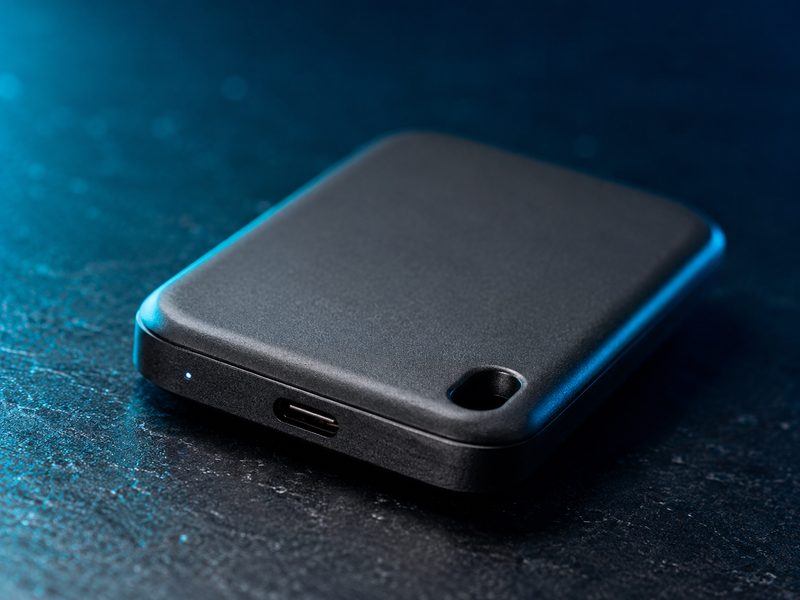
Crucial X10 Pro
The X10 Pro squeezes flagship-class speed into one of the smallest bodies in the category — a drive that disappears into a coin pocket, with an anodized shell, water and dust resistance, and a lanyard hole that actually gets used. For photographers and travelers counting grams, it's the density champion.
- Up to 2,100 MB/s transfers
- Among the smallest flagship-speed drives
- IP55 water and dust resistance
- Anodized aluminum core
Why it made the list: Flagship speed in the smallest practical package.
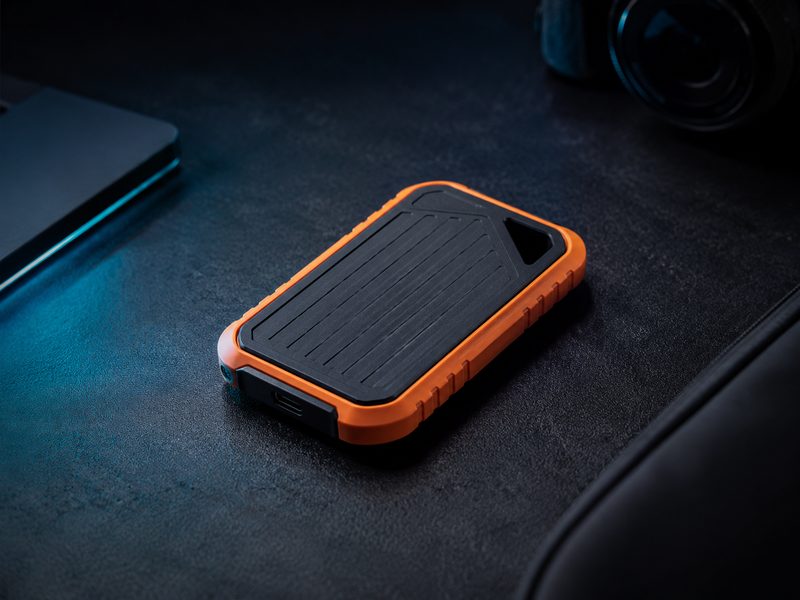
SanDisk Extreme Pro
The Extreme Pro is the field-work standard: a silicone-bumpered shell with IP-rated water and dust resistance, a carabiner hole molded into the body, and speeds that keep up with on-location photo and video offloads. It's the drive that lives on camera straps and in glovebox emergencies — and SanDisk's newest USB4 version extends the line for speed chasers.
- Silicone bumper, IP-rated water/dust resistance
- Built-in carabiner hole
- Fast sustained offload speeds
- USB4 variant available for maximum speed
Why it made the list: The proven outdoor and field-work drive that shrugs off abuse.
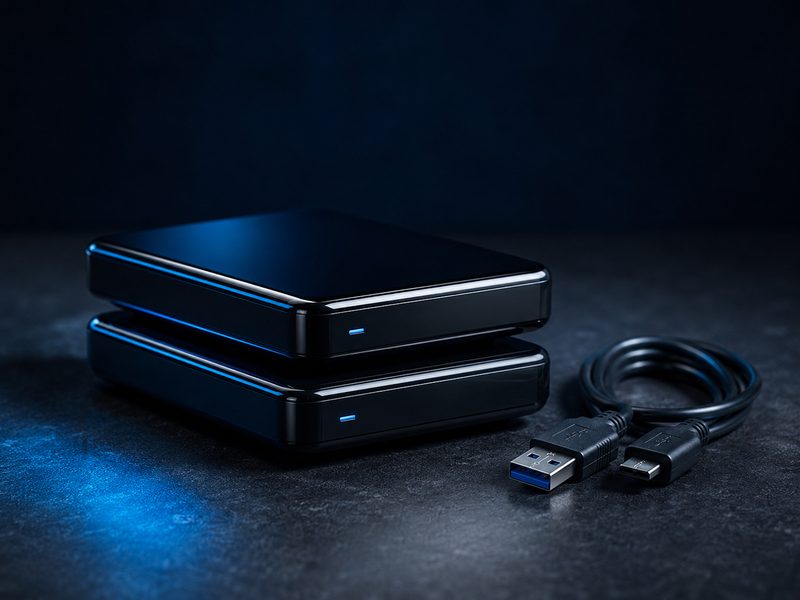
WD My Passport (HDD)
Spinning drives still win one fight decisively: capacity per dollar. The My Passport line offers multi-terabyte backup capacity at prices flash storage can't touch — especially during the current NAND shortage. It's slow by SSD standards and dislikes drops, but for scheduled backups and cold archives that sit on a shelf, it's unbeatable economics.
- Multi-terabyte capacities at HDD pricing
- Included backup software with encryption
- USB powered, no adapter needed
- Best cost-per-terabyte in external storage
Why it made the list: The cheapest way to back up everything — exactly what archives need.
Buying Guide
SSD for working files, HDD for archives
The practical split: portable SSDs for files you actively edit, transfer, or carry; hard drives for backups that sit still. Speed matters constantly on working drives and almost never on a backup that runs overnight.
Your port sets the real speed
A drive can only go as fast as the port it's plugged into. USB4 drives need USB4/Thunderbolt ports to shine; Gen 2x2 drives need Gen 2x2 ports. Check your laptop's spec before paying for speed it can't deliver — everything falls back gracefully, but you'll pay for headroom you don't use.
Follow the 3-2-1 rule
Three copies of anything that matters, on two different media, one off-site or in the cloud. An external drive is one leg of that stool, not the whole plan — drives fail, get lost, and get stolen.
Frequently Asked Questions
Why are SSD prices so high right now?
A global NAND and memory shortage that began in late 2025 has pushed flash prices up dramatically through 2026, with popular models frequently out of stock. Analysts expect volatility to continue for some time. If you need a drive now, compare both retailers and buy when you see acceptable stock; if you can wait, watch for stabilization.
Are portable SSDs reliable enough for irreplaceable files?
They're durable — no moving parts, drop-rated shells — but no single drive is a backup strategy. Keep irreplaceable files in at least two places. Drive failure is rare; loss and theft are not.
Is a USB4 drive worth the premium?
Only if your computer has a USB4 or Thunderbolt port and you move large files regularly — video projects, photo libraries, disk images. For documents and general backup, mainstream Gen 2x2 drives are already faster than most workflows need.
Can I run games from an external SSD?
Yes — modern portable SSDs handle game libraries well over USB 3.2 or faster connections, and consoles support external storage for at least older-generation titles. Load times trail internal NVMe slightly but remain very playable.